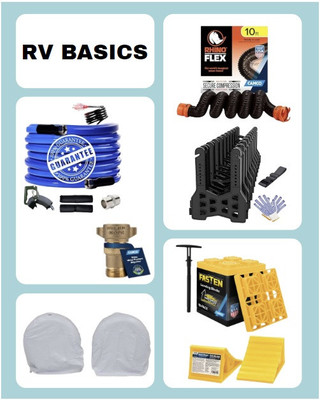
So, you've bought your first RV and you're getting ready for your first adventure. You've probably already read the lists telling you everything you need for your first trip: sewer hose, fresh-water hose, leveling blocks, wheel chocks, electrical hookups, and all the other basics that make setting up camp possible.

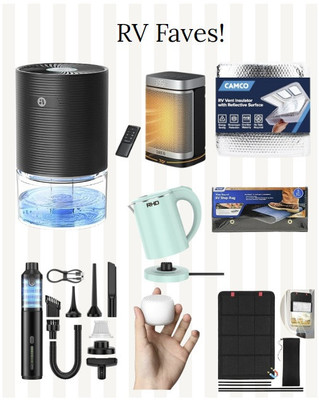
Then there are the interior essentials. A small vacuum makes cleaning easier. A dehumidifier can help control moisture. A space heater can take the chill off a cold morning, and reliable Wi-Fi can make life on the road considerably easier.
Okay. You've got the basics.
Now what?
After eight years of living and traveling in a 16-foot trailer, I've learned that some of the most valuable things I carry aren't necessarily the things I use every day. They're the things I hope I never have to use—but I'm very glad to have when something goes wrong.
These are the items that give me a little extra peace of mind when I'm hundreds of miles from home, sitting in a remote campground, or dealing with a problem on the side of the road.
They aren't necessarily exciting purchases. But they're the things that can turn a potentially stressful situation into a manageable inconvenience.
1. RV Surge Protector
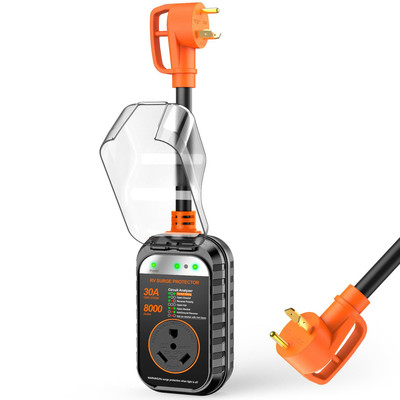
Electrical hookups are something I don't like to take for granted.
When you plug your RV into a campground pedestal, you're trusting that the electrical connection is functioning properly. Unfortunately, campground electrical systems can experience voltage fluctuations, faulty wiring, power surges, and other problems that can damage the electronics inside your RV. Especially at older RV parks.
A good RV surge protector sits between your electrical connection and your trailer and helps protect your appliances and electronics from electrical problems.
Your RV refrigerator, air conditioner, television, battery charger, and other electronics aren't exactly cheap to replace.
This is one of those purchases where spending a little money upfront can potentially save you a much larger repair bill later.
Peace-of-mind factor: High.
It's much easier to plug in a surge protector than to replace an expensive appliance.
2. Tire Pressure Monitoring System
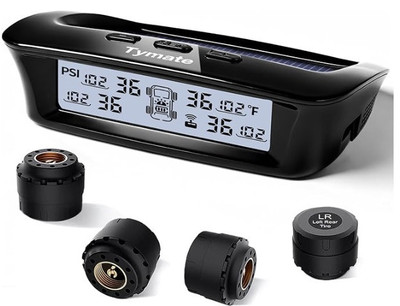
If there's one thing on this list I feel particularly strongly about, it's a tire pressure monitoring system.
I've had firsthand experience with why they're important.
Several years ago, I had a flat tire while driving through Denver. I didn't even know I had a problem. A car traveling beside me noticed something was wrong and flagged me down.
Fortunately, they did.
That experience stayed with me.
Years later, I had another tire problem while traveling in Alaska. This time, my tire pressure monitoring system alerted me to the problem before the tire failed completely. I had enough warning to safely pull off the road rather than discovering the problem after a blowout.
That is exactly why I consider a TPMS one of my most important pieces of RV equipment.
A tire pressure monitoring system allows you to monitor your tire pressure while you're driving. Many systems also monitor tire temperature, giving you another indication that something may be wrong.
A slow leak or overheating tire can turn into a blowout before you realize there's a problem. Having a TPMS gives you another set of eyes on your tires while you're traveling.
When you're towing through a remote area, that extra warning can make a huge difference.
3. Portable Tire Inflator
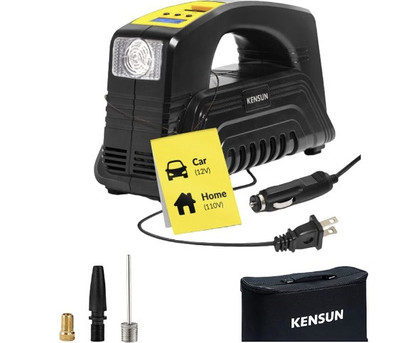
Of course, knowing you have low tire pressure doesn't do much good if you can't do anything about it.
That's where a portable tire inflator comes in.
Campground air compressors aren't always available, and the nearest gas station may be miles away. A portable inflator allows you to add air wherever you happen to be.
It's particularly useful if you discover a slow leak and need to keep the tire properly inflated while you make arrangements for a repair.
Just make sure the inflator you purchase is actually capable of handling your RV or trailer tires. RV tires can require considerably more pressure than standard automobile tires, so check your tire specifications before buying.
4. A Heavy-Duty Jack
Here's another item I hope you never have to use.
But if you ever have a flat tire on your trailer, you'll be very glad you have it.
A standard automobile jack isn't necessarily designed to safely lift an RV or travel trailer. Your trailer may weigh thousands of pounds, or have a higher clearance, so you need equipment appropriately rated for the job.
A heavy-duty jack can give you the ability to change a tire yourself rather than waiting for roadside assistance.
And that can make a huge difference when you're sitting beside a remote highway.
Make sure you know the appropriate lifting points for your specific RV or trailer and that your jack is rated for the load. A jack should never be used as a substitute for properly rated jack stands when working underneath a vehicle.
5. Portable Jump Starter
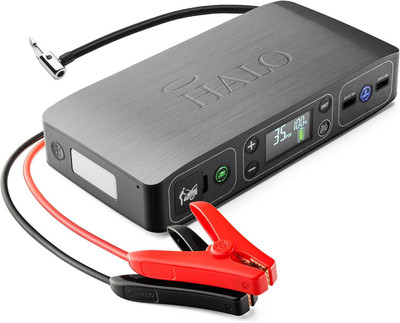
A dead battery is one of those problems that always seems to happen at the least convenient time.
A portable jump starter gives you another option if your tow vehicle or RV battery dies somewhere without another vehicle nearby.
Unlike traditional jumper cables, a self-contained jump starter doesn't require another vehicle to be available.
They're relatively compact, easy to store, and can be useful for more than just your own vehicle. I've found that having one available also means you can potentially help another stranded traveler.
Just remember to keep it charged and check it periodically. I have used my jump starter many times. I love this one and its protective case so I know it's always ready in an emergency.
6. Hitch Locks
If you tow a trailer, your hitch is literally what keeps your home connected to your vehicle.
Hitch locks are inexpensive compared with the value of what they're protecting. Depending on your setup, you may want locks for your receiver, trailer coupler, or other hitch components.
They're small, relatively inexpensive, and easy to overlook.
They're also exactly the sort of thing you'll be glad to have when you're leaving your trailer unattended.
7. AirTag or Other Bluetooth Tracker
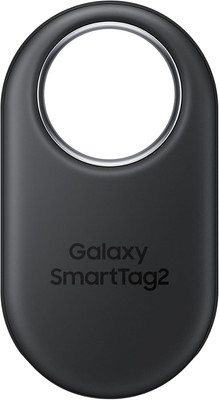
I keep a tracker in my trailer because knowing where your belongings are provides an extra layer of peace of mind.
An AirTag or similar Bluetooth tracker isn't a replacement for a dedicated GPS tracking system, and its usefulness depends on the surrounding device network. But it can be a relatively inexpensive way to help locate your trailer or other valuable equipment if it is moved unexpectedly.
You can also use trackers for things that have a tendency to wander—keys, camera bags, or other expensive gear.
For something so small, it's an easy addition to a travel setup.
8. A Basic RV Tool Kit
You don't need to carry an entire hardware store with you, but a small collection of useful tools can solve a surprising number of problems.
A socket set, screwdrivers, pliers, adjustable wrench, utility knife, electrical tape, lubricant, zip ties, and a few commonly needed replacement parts can go a long way.
After spending enough time on the road, you learn that sometimes the difference between a five-minute fix and a major headache is simply having the right tool.
Your RV doesn't have to be complicated to benefit from a few basic tools.
9. Extra Fuses
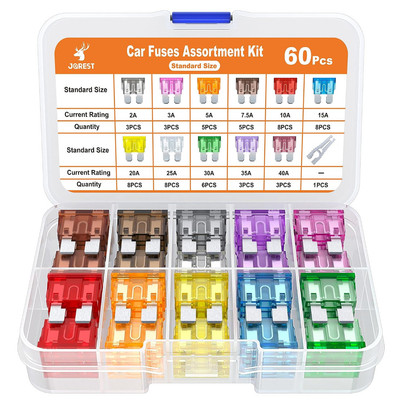
A blown fuse is a tiny problem—until you don't have a replacement.
Keeping a small assortment of the appropriate fuses for your RV and tow vehicle takes almost no space and can save you a trip into town.
They're inexpensive, easy to store, and one of those things you'll probably forget about until the exact moment you need one.
10. A Headlamp
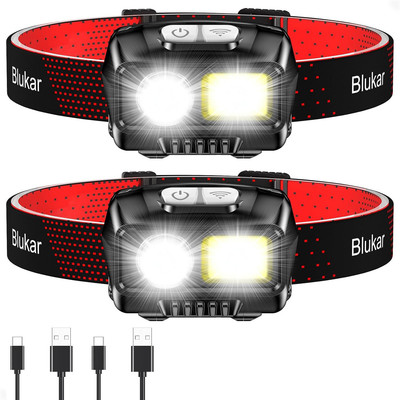
This might be one of the smallest items I carry, but it has earned its place.
There are plenty of situations where you need both hands free while you're working outside your RV. Trying to hold a flashlight in one hand while hitching your trailer, checking a tire, connecting electrical hookups, or dealing with a mechanical problem isn't ideal.
And if you're trying to hitch up early in the morning, after dark, or in the middle of a storm, you definitely don't want to be fumbling around without one.
A headlamp gives you light exactly where you're looking while leaving both hands available to work.
It's also useful for walking around an unfamiliar campground after dark, checking something under your trailer, or dealing with an unexpected problem at night.
For the amount of space it takes up, it's one of the easiest additions to your emergency gear. I prefer this rechargeable one so I never have to worry about dead batteries.
11. Emergency Roadside Kit
Even if you have roadside assistance, I still recommend carrying some basic emergency supplies in your vehicle.
A flashlight or headlamp, reflective vest, warning triangles, gloves, first-aid supplies, and other basic emergency equipment can make an unpleasant roadside situation considerably safer.
Roadside assistance is wonderful when you can get it.
But when you're traveling through remote areas, weather or limited cell service can make waiting for help a very different experience.
Having a few basic supplies means you're not completely dependent on someone else arriving quickly.
BONUS: Backup Food and Water
This one isn't really an RV accessory, but it fits the same philosophy.
I like having enough food and drinking water that being delayed somewhere for an extra day isn't a crisis.
When you're traveling through remote areas, weather, mechanical problems, road closures, or simply a change in plans can turn a quick drive into a much longer one.
Having a little cushion means you don't have to panic every time plans change.
It's especially important when traveling somewhere remote, where the next grocery store or gas station might not be conveniently nearby.

You Don't Have to Buy Everything at Once
One of the easiest mistakes new RVers can make is feeling like they need to buy everything immediately.
You don't.
Start with the essentials. Take a few trips. Learn how you actually use your RV or camper. Then gradually add the things that make sense for your particular style of travel.
But there is a difference between buying another cute camping accessory and buying something that can potentially prevent an expensive repair, alert you to a dangerous tire problem, or help you deal with an emergency on the side of the road.
Those are the purchases I prioritize.
After eight years of living in a 16-foot trailer, I've learned that peace of mind is worth carrying a little extra gear.
I don't want to spend my travels worrying about everything that could go wrong.
I just want to know that if something does go wrong, I have a reasonable chance of dealing with it.
Because that's really what these items are about.
Not expecting something to go wrong.
Being prepared when it does.
Happy travels!
