I didn’t come to Alaska expecting wildlife to simply appear by chance. I went looking for it. I planned drives, booked boat trips, booked flights, and learned where animals tended to move. Wildlife in Alaska is abundant, and in some cases, very predictable. Bears follow salmon. Moose follow willows. Caribou move with the land and the light. The challenge wasn’t whether wildlife existed—it was how much patience it demanded.
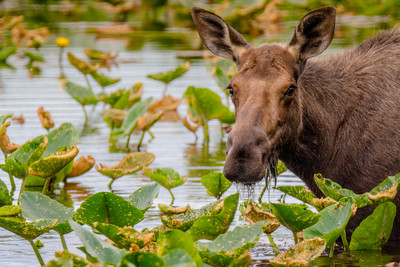
 Moose were the most consistent presence. They were everywhere, often closer than I wanted them to be. Driving the highway at 65 miles per hour with a trailer in tow, I was always alert, watching the edges of the road, knowing a moose could step out without warning.
It was nerve-racking and incredible at the same time. Road signs dotted the highways with how many moose were killed in car collisions, a depressing reminder of the damage vehicles can cause to moose, and vice versa.
Seeing animals that large, that close, as part of daily life never stopped feeling unreal—even when the adrenaline spiked.
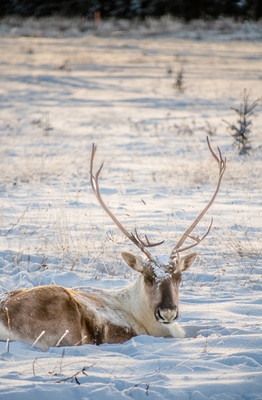 Caribou felt different, more elusive. One afternoon, driving home after a routine grocery run, four of them were stretched out in a snow-covered field, soaking up the weak winter sun in an ordinary neighborhood near my cabin.
They were grazing, enjoying the rare sunshine. They weren’t reacting. They were simply there. Existing. Caribou don’t live in the other forty-nine states, and seeing them felt like witnessing something that belongs entirely to this place—an animal shaped by distance, cold, and migration.
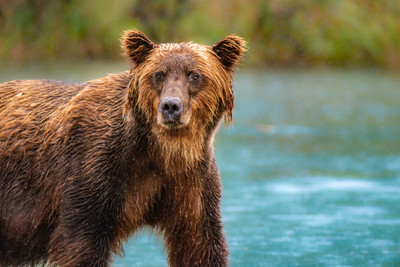 Grizzlies were both predictable and elusive. Bears in Alaska are everywhere—along roadsides, fishing rivers, moving through coastal flats—but seeing them well often required effort and timing.
I booked flights to Brooks Falls and Lake Clark not because bears were rare, but because those places concentrate life. Salmon runs create order in an otherwise massive landscape.
At Brooks Falls, bears stood in rushing water, catching fish mid-air with practiced ease. At Lake Clark, coastal brown bears moved slowly through clear shallows, feeding, resting, repeating the same patterns they have for generations.
Still, for every unforgettable sighting, there were long stretches of nothing. Miles of driving. Empty riverbanks. Hours spent scanning valleys that held no movement at all. Alaska is vast enough to absorb disappointment without apology. Wildlife may be abundant, but it is never guaranteed. Alaska doesn’t offer that kind of reliability. It offers possibility. And sometimes, that possibility stays just out of reach.
But when it works—when timing, weather, season, and patience align—it feels earned. Not staged. Not expected. Just real.
That’s the wildlife checklist I didn’t plan for: not a list of species, but a record of waiting, watching, missing, and finally seeing.
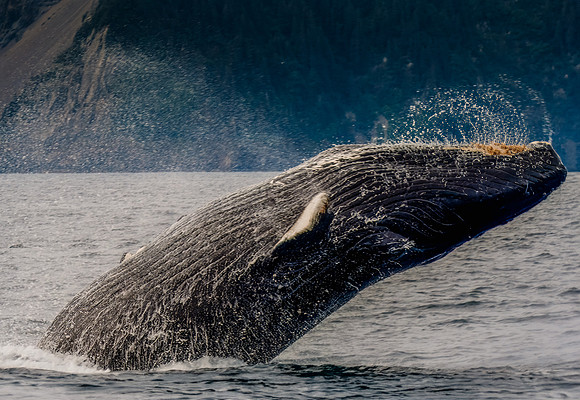 Alaskan Wildlife
